9 · minor arcana · swords
Nine of Swords
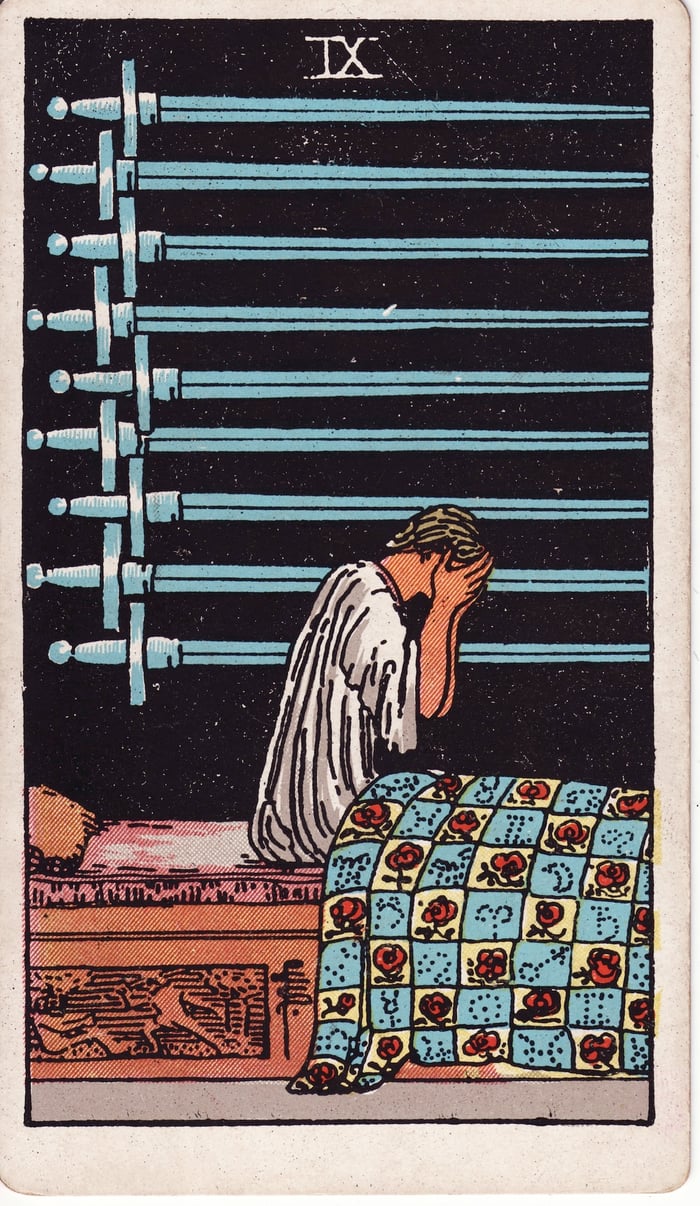
The Nine of Swords represents anxiety, guilt, intrusive thoughts, and mental anguish. It is the suffering that happens in the mind—often at night, in isolation, when fears amplify. This card speaks less about objective danger and more about internal distress.
It is the mind turned against itself.
Five lenses on this card. Pick one.
Jungian, shadow and cognitive distress
Archetypally, the Nine of Swords represents the shadow expressed through thought.
Psychological themes:
- Internalized criticism
- Guilt complexes
- Anxiety disorders
- Over-identification with thought
In Jungian terms:
- The shadow emerges in the mental field
- The ego fixates on fear or moral failure
This card marks:
The psyche overwhelmed by its own narratives.
Number Significance
Core Numerological Themes of Nine:
- Culmination
- Intensification
- Integration before completion
- Wisdom through struggle
In the Swords suit (Air, mind, conflict):
- Nine represents mental suffering reaching its peak
- Thought has intensified into distress
Nine is:
The mind at its limit before collapse or release.
It precedes:
- Ten of Swords — final breakdown or surrender
Synthesis
The Nine of Swords is not objective catastrophe — it is subjective anguish.
It asks:
- What fear am I amplifying in isolation?
- What guilt needs acknowledgment rather than rumination?
- Can I question the authority of my anxious thoughts?
Where:
- The Five of Swords shows external conflict,
- The Eight of Swords shows self-imposed limitation,
The Nine of Swords reveals:
The suffering created when the mind believes every thought.
It teaches that mental pain, while intense, is often narrative-based rather than fate-based—and that relief begins when the story is challenged, shared, or reframed.