V · major arcana
The Hierophant
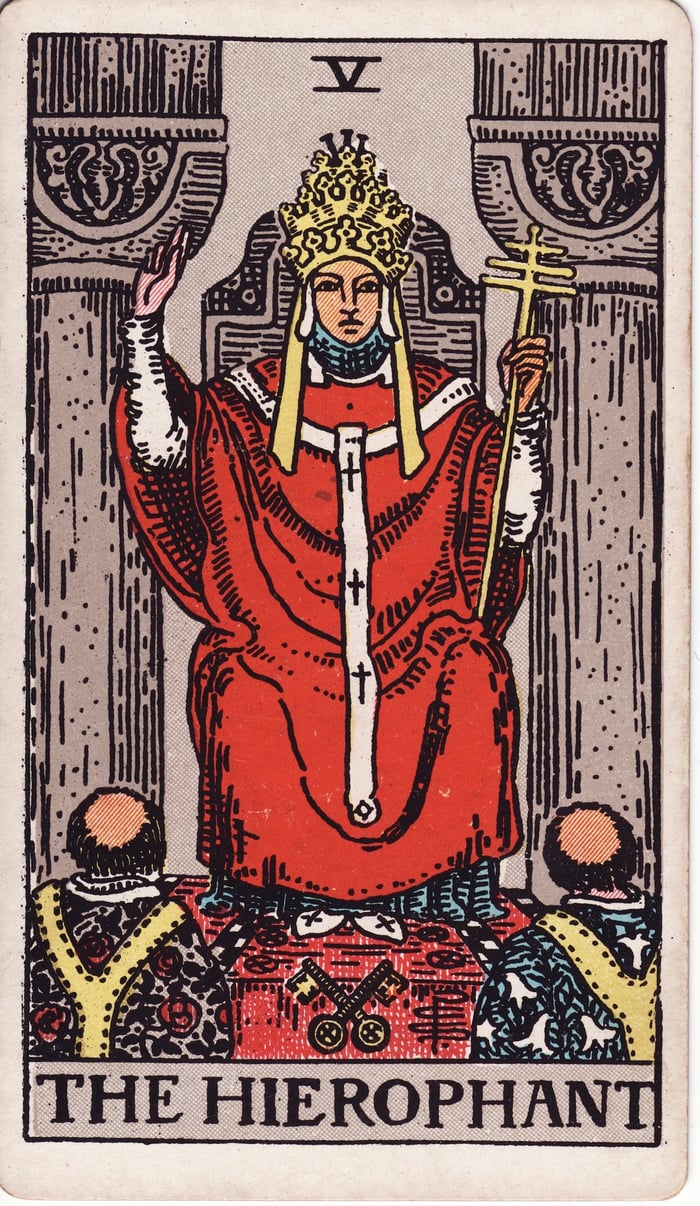
The Hierophant represents tradition, shared belief systems, moral frameworks, and the transmission of sacred knowledge through structure. He governs what is learned, taught, preserved, and sanctioned by a community, culture, or lineage.
Where The High Priestess guards inner mystery, The Hierophant formalizes meaning.
Five lenses on this card. Pick one.
Jungian, cultural and developmental
Archetypally, The Hierophant represents the internalized authority of culture and tradition.
Psychological themes:
- Superego development
- Moral conditioning
- Identity shaped by shared values
- Tension between individuality and belonging
In Jungian terms:
- He reflects collective norms internalized by the psyche
- He mediates between personal desire and social order
This card marks:
The psyche negotiating belonging versus autonomy.
Number Significance
Core Numerological Themes of Five:
- Challenge
- Testing
- Change within structure
- Friction between stability and freedom
In the Major Arcana:
- The Emperor (IV) establishes order
- The Hierophant (V) transmits and tests it
Five represents:
Growth through tension.
The Hierophant holds tradition at the point where it must be questioned, renewed, or recommitted to.
Synthesis
The Hierophant is not blind conformity — he is conscious participation in shared meaning.
He asks:
- What do I believe, and why?
- Which traditions am I honoring by choice rather than habit?
- How do structure and meaning support one another?
Where:
- The High Priestess teaches inner knowing,
- The Magician teaches individual will,
The Hierophant teaches:
Wisdom that endures because it is shared.